
Liquid Cooling Data Centers Mexico 2026: Foxconn Success Story
The AI boom has pushed rack densities in Mexico data centers to 100-200 kW. Traditional air cooling is no longer sufficient. Liquid cooling for data centers reduces PUE to 1.1, saves 40-60% on energy consumption, and ensures operational continuity for AI and high-performance computing workloads.
The real case of Foxconn Mexico with Reaclima demonstrates successful implementation, quantified benefits, and a practical guide for IT directors, construction managers, and procurement teams in Mexico during 2026.
What is Liquid Cooling and How Does it Work?
Liquid cooling in data centers uses specialized fluids—such as treated water or dielectric liquids—to absorb heat directly from chips and processors. This method is up to 3,000 times more efficient than conventional air cooling.
Two main technologies:
- Direct-to-chip: Cold plates mounted on CPU and GPU capture heat at the source. Ideal for retrofitting existing equipment.
- Full immersion: Servers completely submerged in non-conductive liquid. Single-phase is simpler; two-phase offers maximum efficiency.
It eliminates hot spots, allows inlet temperatures above 45°C, and supports ultra-dense racks without compromising performance.
Comparison: Liquid Cooling vs. Air
Thermal efficiency:
- Air: Reference 1x (practical limit 30-40 kW per rack).
- Liquid: 3,000x superior (supports +70% rack capacity).
Cooling energy consumption:
- Air: Represents 40-50% of total OpEx (typical PUE 1.5).
- Liquid: 50-60% less consumption (PUE 1.1).
Space requirements:
- Air: Large fans + extensive CRAC units.
- Liquid: Compact design without fans (-30% footprint).
Initial cost (CAPEX):
- Air: Lower initially.
- Liquid: 20-30% higher, but payback in 2-4 years through OpEx savings.
Noise and sustainability:
- Air: High noise levels, high WUE.
- Liquid: Silent operation, reusable waste heat, ASHRAE/LEED compliant.
Why Liquid Cooling is Essential in Mexico 2026?
Global data center consumption will reach ~1,000 TWh according to IEA, with cooling representing 40-50% of the total. Mexico is experiencing a "data center fever" driven by AI and Nvidia, despite significant energy challenges. Uptime Institute predicts direct liquid cooling (DLC) will become standard due to AI workload density.
In Mexico, it reduces cooling consumption by 50-60%, maintains PUE below 1.2, and complies with 2026 energy regulations.
Practical Benefits for Mexico Operations
- 40-60% savings in kWh for cooling systems; ROI in 2-4 years.
- Support for 100-200 kW racks without hot spots.
- 30-50% reduction in water use (WUE); heat recovery for urban districts.
- Lower noise and space requirements; ASHRAE and LEED certifications.
- Immediate scalability for AI workloads with OEM support (Nvidia, Dell).
Success Story: Foxconn Mexico with Reaclima
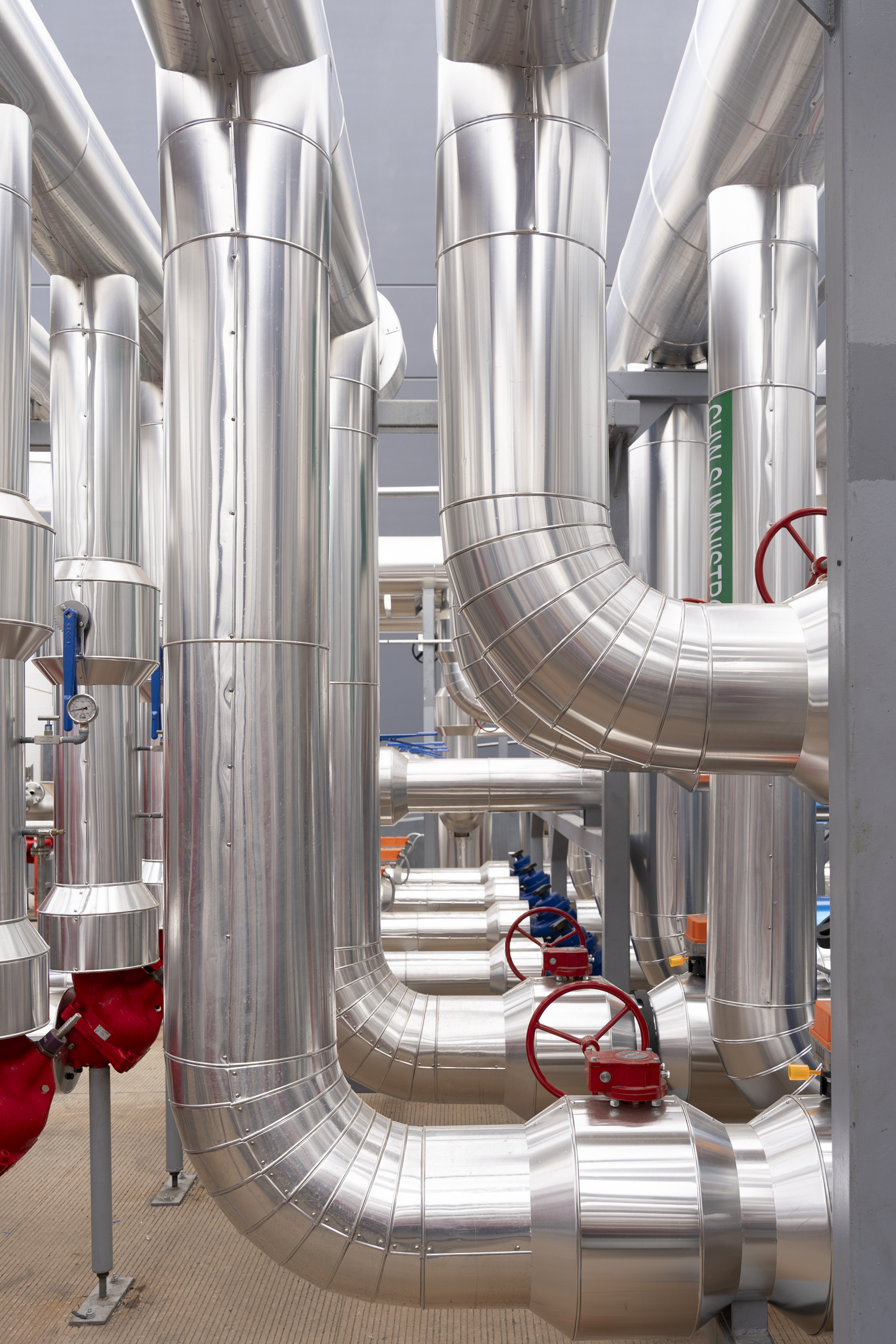
At Foxconn Mexico plant—dedicated to Nvidia AI servers—Reaclima implemented a hybrid liquid cooling for Foxconn system: 25,000 TR chilled water plant, plus 15,000 linear meters of precision piping.
Key technical aspects:
- BIM design + LiDAR laser scanning for millimeter precision and zero collision errors.
- Variable flow chillers + energy recovery: 25% PUE reduction.
- Commissioning without interruptions (zero downtime).
- Immediate scalability for future AI workloads.
This real Mexico project positions operations as a strategic competitive asset.
Evaluate your data center today with Reaclima, contact us today!


